Multilingual SEO: How to build local authority in global markets

Physical media and traditional marketing are very straight forward. Wherever your media is – that’s the audience. You can guarantee the language, cultural context and local market.
However, digital marketing is a completely different ball game. Everything is interconnected, where a marketing agency in Shrewsbury can create multilingual sites for audiences across the globe. With that, SEO becomes more complex.
Whether it’s our Performance and Marketing Team diving into SEO strategies or our Development Team transforming visions into reality, we’ve mastered the art of building local authority in global markets through effective international SEO strategy.
What is Multilingual Search Engine Optimisation?
Most brands treat international SEO strategies as a technical checklist, focusing on elements like hreflang tags or literal translations. However, that’s where many go wrong.
International SEO is much more than just translating keywords or tweaking technicalities; it’s about truly connecting with an international audience by respecting their language, culture, and local individualities. Effective international SEO strategy involves language targeting and content localisation, all to ensure your website’s content resonates authentically with users in different countries and languages.
Incorporating these elements into your multilingual SEO efforts not only enhances user experience but also builds local authority in global markets, helping your brand stand out among relevant websites and popular search engines beyond Google.
Cultural Fluency, Brand Building and More Than Google Translate!
International SEO is a brand-building tool. It’s about “cultural fluency” and ensuring the brand’s authority and tone of voice aren’t lost in translation.
When we’ve meticulously crafted a brand’s tone of voice, developed strategic brand guidelines, and flawlessly populated their site, a simple translation will not uphold these standards. If you’ve ever played around with Google translate, you’ll know it’s never a straight translation. There are contextual differences and change of tone, so what you are aiming to say doesn’t truly translate.
By developing different SEO strategies for foreign languages, you are ensuring the message is interpreted as it should be, the flow of your website is just as smooth, and the user journey is as strategically planned out. If SEO isn’t rewritten, the audience won’t be found, seen or heard.

The Business Goals Behind Global SEO Strategy
The primary goals of SEO are to increase high-quality organic traffic, improve search engine rankings for relevant keywords, and boost conversions by enhancing website visibility and user experience. For international SEO strategy, that is no different.
Successful SEO, regardless of where it sits in the world, should be measured on how it converts the audience into website traffic, leads, sales and conversions. Especially for a brand reaching into international waters, SEO that drives conversation and brings an understanding audience to their door is a testament to the strong work put in behind the scenes to translate the brand and everything with it.
International SEO Strategy at Reech
At Reech, while our roots are strongly planted in Shropshire, our SEO strategies are crossing borders. Strategic thinking is the baseline of every decision, whether it’s a brand refresh with new colour palette and logo or expanding a website’s domain with multilingual performance strategies.
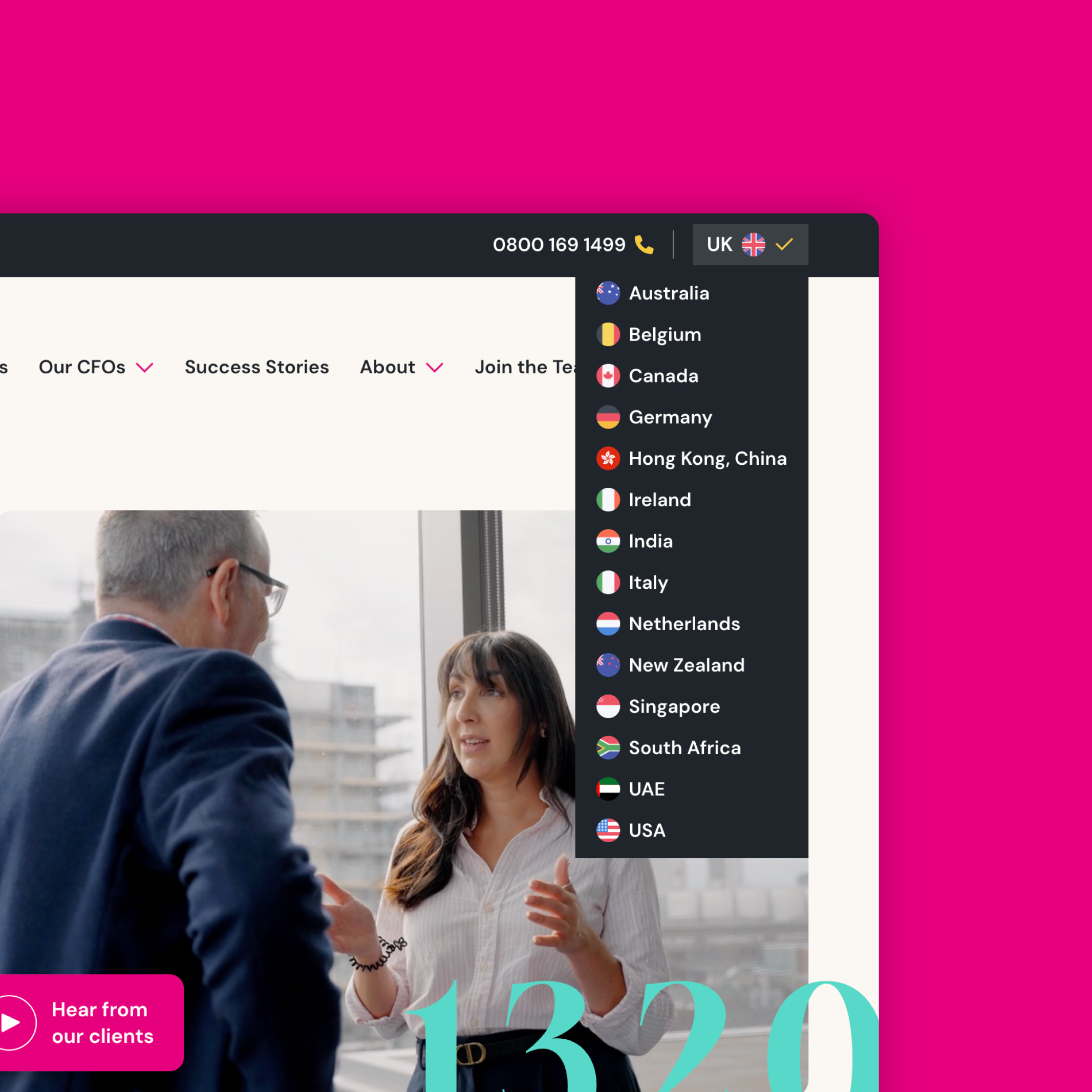
A recent example of international work is the web development of our client The CFO Centre. A brand-new website, optimised and designed for performance and lead generation. 15 countries, 15 languages, 15 SEO strategies. Shout out to our dev team for the hard work and resilience behind such a mammoth project!
Another project in the works is Premier Modulars strategic digital transformation and a multisite structure. The complex project has seen a high-performing digital site – and if that’s not impressive enough – they’re next up to the global stage as we’re currently working on their international sites.
‘Reech’ing New Markets
From local SEO best practices to new international SEO strategy, we’re your go-to team. If you’re thinking of expanding your website to reach new markets, get in touch with our expert team: https://reech.agency/contact-us/.
Frequently Asked Questions
-
International SEO optimises your website to rank higher in search results for multiple languages and countries. Implementing international SEO boosts organic traffic, conversions, and brand visibility by delivering localised content in users’ native languages and contextual environments.
-
Choosing the right URL structure is crucial for international SEO success. Common options include country code top-level domains (ccTLDs), subdomains, and subdirectories. Each has its pros and cons regarding SEO authority, ease of maintenance, and targeting. For example, ccTLDs provide strong country targeting but require separate domains, while subdirectories share domain authority but may need careful hreflang implementation. Using dedicated URLs helps search engines serve the correct version of your website to the right target audience.
-
Hreflang tags are HTML attributes that indicate to search engines the language and regional targeting of each page. They help search engines understand which version of a page to serve users based on their local language or target country, thereby avoiding duplicate content issues. Proper implementation of hreflang tags is foundational for effective international SEO and improves your website’s visibility in search engine results pages for different markets and languages.
-
Conducting thorough market research and using keyword research tools like Google Keyword Planner or other keyword research tools is essential for international SEO. Keywords must be transcreated, not just translated, to match cultural nuances and local search behaviours. Analysing competitors’ keyword rankings and filtering by search volume and keyword difficulty helps find relevant keywords that resonate with your target market in each language and region.
-
Monitoring international SEO performance involves tracking key metrics using tools like Google Analytics 4 and Google Search Console. These platforms provide insights into how international visitors interact with your site and how your content ranks in different countries. Using rankings trackers can help you analyse keyword rankings and visibility across multiple countries, enabling you to optimise your international SEO efforts effectively.